
WEEK 9: Space + Art

 This week's material was very interesting. Connecting art and space makes me think about all the amazing photos that we have captured of the infinite space. In addition, all the technology utilized to be able to capture the photos in the first place. With art, science, and technology, we are able to visualize beyond our world. It is really cool that we are able to capture images of these unknown places through photographs, paintings, drawings, and with our own eyes. Galileo used the telescope to make out mountains and craters on the moon and was able to see the Milky Way galaxy. He drew the images he saw of the moon and this helped advance technology to be able to capture stars, calculate stellar distances, and gather information about chemical composition and motion of celestial objects. 

Cougs in Space: Launching satellites and careers – WSU Insider
Hilding, Tina. “Cougs in Space: Launching satellites and careers – WSU Insider.” WSU Insider, 10 March 2022, https://news.wsu.edu/news/2022/03/10/cougs-in-space-launching-satellites-and-careers/. Accessed 27 May 2022.

The impact of space on art fueled the media. For example, movies such as Star Wars, Star Trek, and The Martian were able to be created due to the interest of space. The "space race" between the United States and USSR was what really sparked the media interest in space. Newspapers were the main source for both sides to shape the view of individuals. The US made Soviets out to be villains, while the Soviets used the media as propaganda for the Soviet reputation for success. The media brought an interest in space exploration and space in general. 
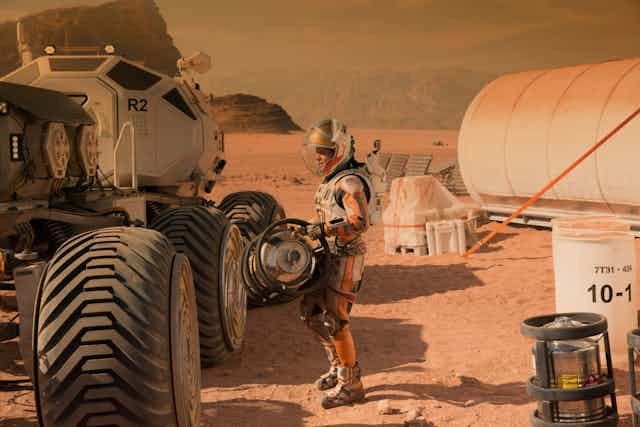
The Martian got me cheering, but why go to Mars?

Agar, Jon. “The Martian got me cheering, but why go to Mars?” The Conversation, 30 September 2015, https://theconversation.com/the-martian-got-me-cheering-but-why-go-to-mars-48395. Accessed 27 May 2022.

In addition, the rovers on Mars collect data and take images of their surroundings. Humans have yet to access Mars due to the conditions of the planet, but we were able to send rovers instead. This intersection of technology and space have allowed us to explore a different planet without having to be on the planet itself. We are able to collect data on the climate, geology, and determine whether life was ever present on Mars. This all was due to the relationship of art and space and how they helped influence the advancement of technology. 
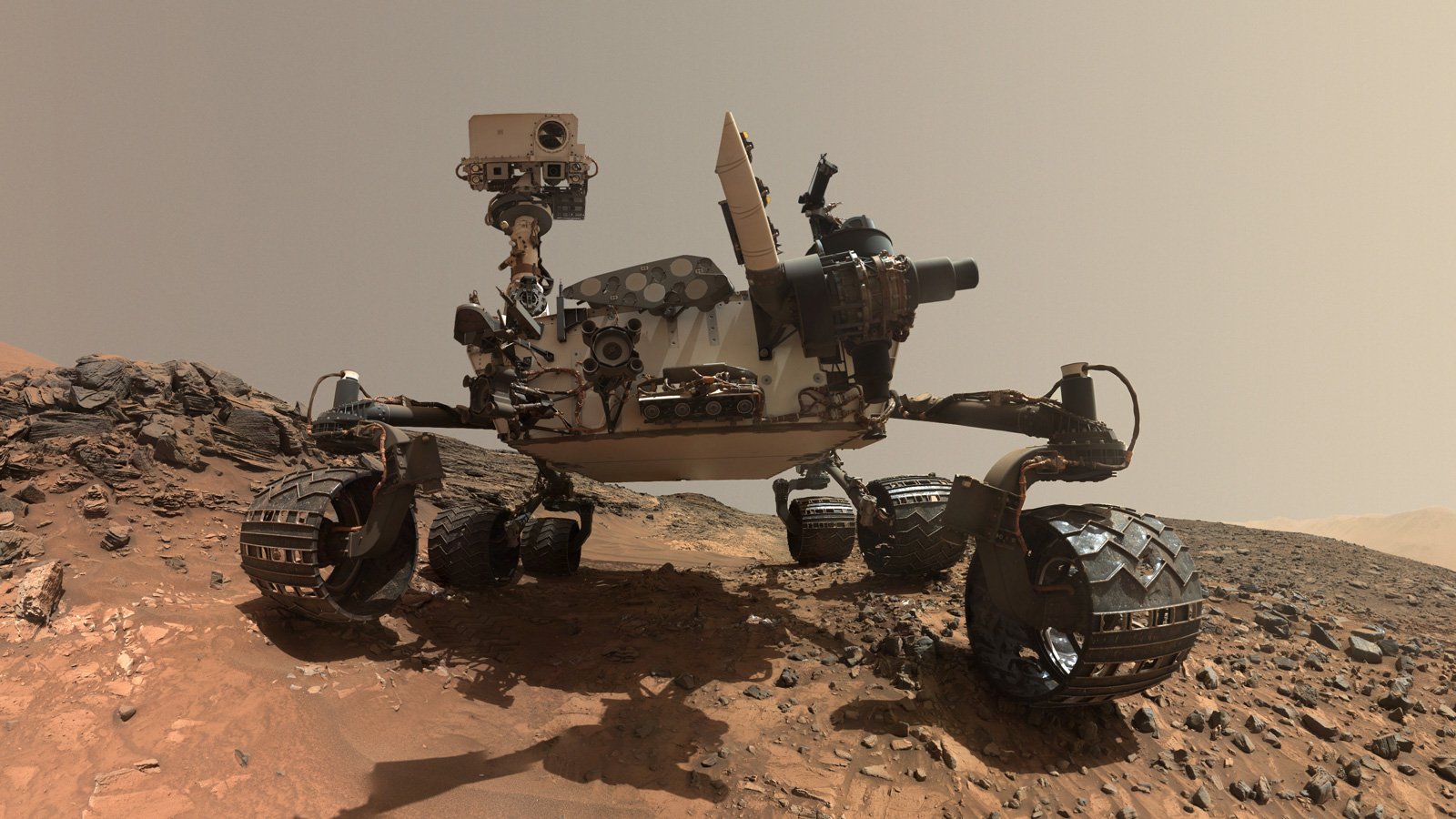
Home | Curiosity – NASA Mars Exploration

“Home | Curiosity – NASA Mars Exploration.” NASA's Mars Exploration Program, https://mars.nasa.gov/msl/home/. Accessed 27 May 2022.

Resources:

Almeida, Andres. “NASA and Art: A Collaboration Colored with History.” NASA, 12 Apr. 2017, http://www.nasa.gov/feature/nasa-and-art-a-collaboration-colored-with-history.

Esaak, Shelley, and Henry Moore. “Is the Definition of Space in Art?” ThoughtCo, 30 May 2019, https://www.thoughtco.com/definition-of-space-in-art-182464. Accessed 27 May 2022.

NASAhttps://www.nasa.gov/. Accessed 27 May 2022.

Ross, Casey C. “"A Magnificent Desolation" : How the Media Shaped the Space Race 1957 to 1969.” Institutional Scholarship, https://scholarship.tricolib.brynmawr.edu/handle/10066/4919. Accessed 27 May 2022.

Vesna, Victoria, director. 8 Space pt1 1280x720. YouTube, UC Online, 29 July 2013     https://www.youtube.com/watch?v=6ZIqTR332l8&t=225s. Accessed 27 May 2022.


Comments

  1. Hi Sydney,
    I enjoyed reading your blog for this week! I agree that this week's material was particularly interesting, as learning about the intersection between art and science isn't a topic I've delved into before. As you mention, it is this intersection that has allowed our culture to progress both technologically and artistically. In my blog, I also wrote about how movies like Star Wars contributed to the space craze and was also a result of it.

    ReplyDelete

Post a Comment

Popular posts from this blog

Event 2

 This week I attended Jessica Irish's zoom meeting. She talked about how plastic is harming not only our Earth, but the human race and animals.  From this meeting, I learned that micro plastic is now in almost everything. Micro plastics are in our food, water, environment, and even in rain. In 1940 plastic was created, for the most part plastic has been helpful for our everyday lives. It has been created to be helpful to us in order to store things, in buildings, transportation, and industrial machinery. The consequences of plastic is much bigger. Wild life in the ocean, for example, are dying from consuming plastic that is left in the ocean. Jessica's example she used were whales in the ocean. This example connected the issue with real life and it showed the serious consequences plastic has on not only the humans, but the animals as well. In addition, she had mentioned that there is now more built mass than natural ecosystems left on Earth. This is highly problematic because ...

Week 6: BioTech & Art

 In this week's lecture, we learned about biotechnology and art and the ways that they work together. This week's material really opened my eyes to something I had surface level knowledge of previously. I knew that biotechnology altered genetics, but I did not know how it could connect to art. Eduardo Kac's green rabbit was created by transferring a fluorescent gene from jellyfish to the cells of an albino rabbit. Though it is cool that there is now a glowing green rabbit, it is a questionable form of the use of biotechnology. Some genetically engineered organisms make me think that maybe biotech artists are going too far with their experiments and should not push the limits to what they can do with genetic engineering.  Another example would be artist Marta DeMenezes' butterfly wings. She modified monarch butterflies' wings and the result ended with holes in their wings. Similar to the rabbit, cell structures were altered and the genetic makeup of the organism was ...

WEEK 7: Neuroscience + Art

 This week's material with neuroscience and art seem like they may not be similar, but in reality there is a lot in common. Our minds create art both consciously and subconsciously.  I think that the idea of consciousness and the ability to use it for art is cool and it takes last week's material one step further. The brain is so interesting in that it is very unique. There are so many functions our brain allows us to do. The idea that we can draw out our nervous system looks like is very cool because it is very detailed and just helps show the relationship science and art have. Another interesting thing our brain allows us to do is dream. About 95% of the time we don't remember our dreams. There is so much research on what happens in our subconscious minds that is fascinating. Freud argued that our subconscious minds were a place that is not being used for positive things and nothing was really going on there. On the other hand, Jung argued that this was where our creativi...